
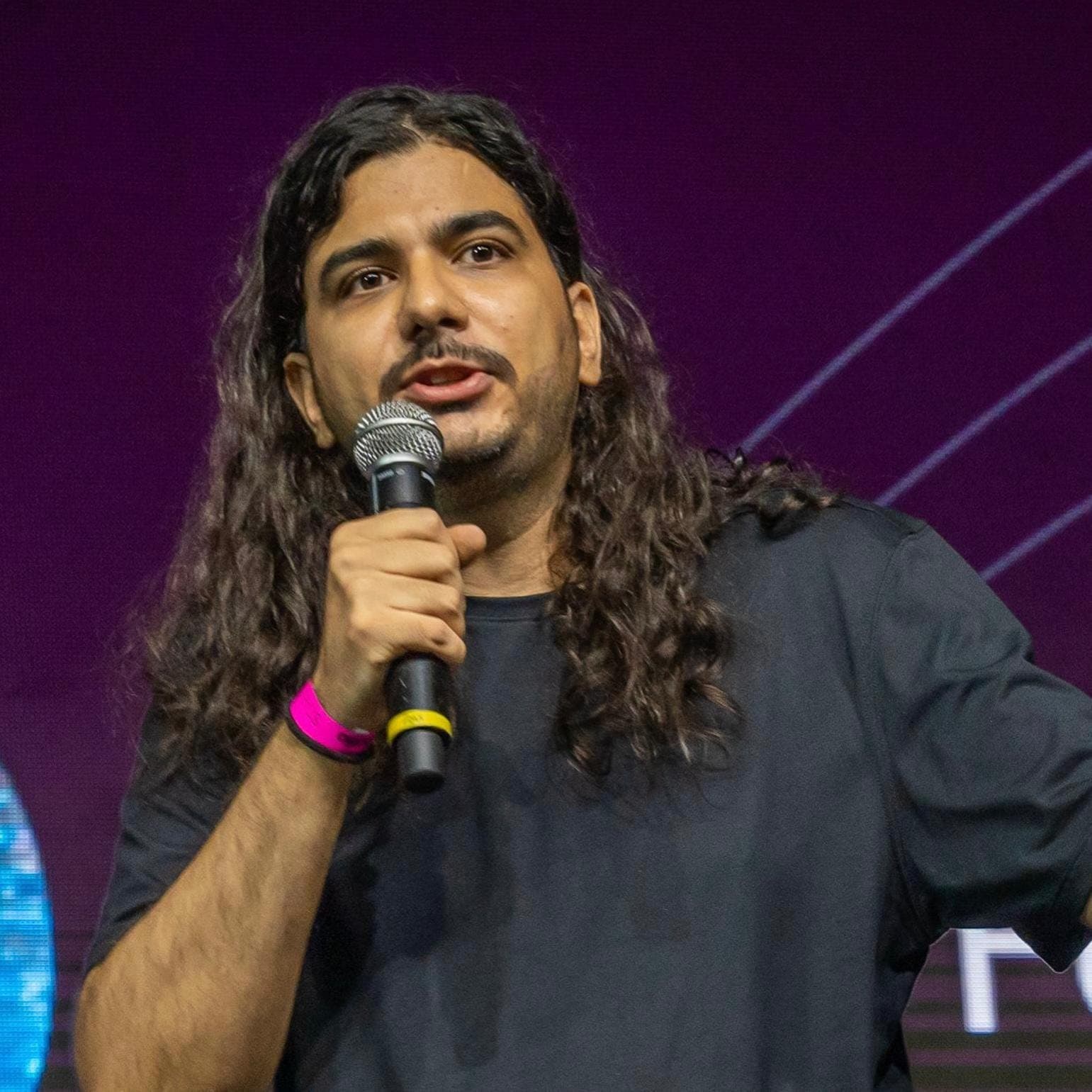

Meet the 12 fellows and two grantees working across Bitcoin’s open-source ecosystem after Bitcoin Dev Launchpad Cohort 2.
Bitcoin Dev Launchpad is designed to help developers move from learning about Bitcoin to contributing to its open-source infrastructure.
Its second cohort received 322 applications, with 23 participants selected for an intensive in-person residency. After the program, Vinteum selected 12 developers for full-time fellowships and awarded grants to two additional contributors.
They are now working across Bitcoin Core, wallets, mining, lightweight clients, privacy, fuzzing, cryptography, network observability, and experimental protocol research.
The fellowships began four months ago, giving participants time to establish a direction, begin working closely with mentors, and produce initial results before this public announcement. This post introduces the new cycle and shares an early look at the work already underway.
Adapting the fellowship model
The growth of Bitcoin developer education is creating a new challenge for the ecosystem.
Programs run by Vinteum, Chaincode Labs, Btrust, Bitshala, Librería de Satoshi, and others are helping more developers enter open-source Bitcoin development. However, the availability of appropriate entry-level work and the mentorship capacity of experienced contributors have not grown at the same pace.
Major repositories often attract more aspiring contributors than maintainers can effectively support. Even small contributions require context, guidance, and review time. Directing every new developer toward the same projects is therefore not a sustainable approach.
AI-assisted development makes this challenge more complex. These tools can improve the productivity of experienced developers, but they can also allow juniors to produce code before developing the understanding needed to evaluate it. The result may look productive while transferring more work to reviewers.
For this reason, we discourage premature dependence on AI during important learning periods. We evaluate fellows not only by pull requests or merged code, but also by technical understanding, judgment, review quality, communication, and long-term contributor potential.
We are also making the program more flexible. Some fellows become productive upstream contributors quickly. Others need longer periods of study, particularly in cryptography, privacy, network analysis, and protocol research. When the path justifies it, a fellowship may now last up to 12 months.
Supporting under-resourced areas
This new cycle also reflects a change in how we direct talent.
Rather than concentrating every fellow in the same established repositories, we are supporting important but under-resourced areas of the ecosystem. These include newer projects such as Mujina and P2Poolv2, projects evolving from solo-maintainer efforts into collaborative teams, and infrastructure related to IPC, monitoring, telemetry, wallet privacy, fuzzing, and network observability.
We are also creating space for research-heavy paths where the result may not be an immediate upstream contribution. A useful outcome can be a prototype, a reproducible experiment, a technical article, a clearer problem definition, or evidence that an idea should not yet be pursued.
Our goal is not simply to produce more contributors. It is to help developers become capable of choosing meaningful problems, understanding the systems they work on, collaborating with maintainers, and eventually taking responsibility for important Bitcoin infrastructure.
New grantees
Johnny Santos: P2Poolv2 and decentralized mining infrastructure
Johnny Santos is a software engineer with more than a decade of experience and a long-standing involvement in the Bitcoin ecosystem. His background includes four years working on Bitcoin payment infrastructure at OpenNode and regular participation in São Paulo BitDevs.
After joining Bitcoin Dev Launchpad Cohort 2, Johnny received a Vinteum grant to work on P2Poolv2, a project focused on reviving and modernizing P2Pool as decentralized mining infrastructure.
P2Pool allows miners to collaborate economically without depending on a centralized pool operator, while preserving miner-level control over block templates and transaction selection. The project aims to offer miners some of the economic benefits of pooled mining without introducing the same level of coordination and censorship risk associated with conventional mining pools.
Johnny has recently been implementing compact block relay, peer-to-peer messaging infrastructure, and Bitcoin Core IPC support in P2Poolv2. He has also been leading tests on testnet3 and testnet4 to move the project closer to a usable early version.
GitHub: https://github.com/johnnyasantoss
Chris G.: Floresta, Utreexo, and project sustainability
Chris G. is a senior software engineer with more than 25 years of experience across electrical engineering, computer engineering, distributed systems, and technical leadership, including CTO roles.
He received a Vinteum grant to contribute to Floresta, a lightweight and embeddable Bitcoin client designed to provide strong validation guarantees with lower resource requirements.
Since joining the project, Chris has helped improve the organization of the Floresta team by establishing clearer quarterly roadmaps, strengthening coordination, and bringing more structure to development processes.
One of his goals for the remainder of the year is to take on additional maintainer responsibilities and improve the distribution of ownership across the project. This would create more capacity for research and protocol development while reducing the project’s dependence on a small number of contributors.
Chris is also working on a reference implementation of Utreexo in Lisp. The project serves both as a way to deepen his understanding of the protocol and as support for the development of a precise mathematical description that can serve as a foundation for formal proofs and validation of the UTXO set cryptographic accumulator.
Guile Utreexo: https://git.sr.ht/~csgui/guile-utreexo
He has also provided architectural guidance to the Floresta team and contributed to the modularization of project components, including its mempool implementation and fee estimation infrastructure.
GitHub: https://github.com/csgui
New fellows
K-YU: Expanding BitcoinFuzz
Caio, also known as K-YU, is working full-time on BitcoinFuzz under the direct mentorship of Vinteum Head of Engineering Bruno Garcia.
His work has focused on expanding BitcoinFuzz’s coverage and integrations, with growing emphasis on libbitcoin-system, Bitcoin Core consensus behavior, and differential fuzzing.
During the first months of the fellowship, K-YU progressed from smaller maintenance tasks into more substantial development and debugging work. This has included investigating fuzzing divergences, improving test corpora, and identifying issues in libbitcoin-system related to block validation and script execution.
Differential fuzzing is particularly valuable because it compares multiple implementations of the same behavior and searches for cases where they disagree. These divergences may reveal bugs, ambiguous behavior, or inconsistencies between implementations.
K-YU’s progress reflects the contributor path Vinteum aims to support: helping promising developers build the technical depth, workflow discipline, and review experience needed to contribute meaningfully to critical Bitcoin infrastructure.
GitHub: https://github.com/KY-U
Renato Britto: corepc and the rust-bitcoin ecosystem
Renato Britto is working full-time across the rust-bitcoin ecosystem, with regular mentorship from Tobin Harding.
His main project is contributing to the creation of a new Bitcoin Core RPC that generates OpenRPC specifications. He is using this work as a foundation for building a production client for rust-bitcoin’s corepc library.
Alongside this effort, Renato has developed broad context across corepc, rust-bitcoin, rust-psbt, and rust-bech32. He has contributed to dozens of pull requests and reviews, including support for Bitcoin Core v31.0 and Electrs in corepc, CI maintenance, mutation testing in rust-bech32, and PSBT v2 to v0 conversion in rust-psbt.
His work combines a high contribution and review throughput with deeper study of Rust, testing, API design, library maintenance, and Bitcoin protocol development.
Renato is increasingly becoming a reliable contributor across the rust-bitcoin organization, with a focus not only on producing code but also on helping downstream projects work with stable and up-to-date Bitcoin Core interfaces.
GitHub: https://github.com/satsfy
Jayr Motta: Mining hardware and open-source firmware at Mujina
Jayr Motta is a software engineer with more than 18 years of experience across different industries and technical roles. His previous work included helping launch one of Europe’s early cryptocurrency Visa cards.
He later decided to focus his career on Bitcoin and received a Vinteum fellowship to contribute long-term to Mujina, an open-source firmware project for Bitcoin mining hardware.
One of Jayr’s first major contributions has been introducing Stratum V2 support to Mujina. This opportunity grew out of his participation in a cybersecurity-focused hackathon, where he identified a bug in an SV2 crate, and his subsequent attendance at the annual Stratum V2 retreat.
His work has included testing and improving Stratum V2 mining application setups, validating the new sv2-ui across solo and pooled mining configurations, contributing interface feedback, and participating in protocol design discussions with the Stratum V2 team.
His next focus includes improvements to nonce space management, scan timeouts, and support for different ASIC chip and board topologies. These are important building blocks for more reliable mining firmware and better integration with real-world hardware.
Beyond code, Jayr contributes to the local technical community by organizing BitDevs meetups in Uberlândia and running DIY workshops that connect open-source development with practical education and hardware experimentation.
GitHub: https://github.com/jayrmotta
m4ycon: Bitcoin network monitoring and observability
Maycon, also known as m4ycon, is working full-time on Bitcoin network monitoring and observability, with a focus on peer-observer and Bitcoin Core network behavior.
His fellowship has included deploying and maintaining peer-observer infrastructure, improving monitoring and Grafana configuration, and contributing to the project through code, issues, and reviews. A major focus of his first months was reproducing and extending research on compact block reconstruction using metrics built on top of peer-observer’s log-extractor.
More recently, Maycon reviewed Bitcoin Core PR #35558, which proposes pre-filling compact blocks with additional transactions to increase the likelihood that receiving nodes can reconstruct blocks without an extra network round trip. He ran patched Bitcoin Core nodes on mainnet, collected and parsed their logs, and published an analysis comparing compact block reconstruction with and without the proposed pre-filling behavior.
He has also begun working on a cluster mempool observer inspired by a project proposed by b10c. The project will use Bitcoin Core’s cluster mempool data to visualize transaction relationships, clusters, chunks, and fee-rate ordering, helping developers and researchers better understand the new mempool architecture introduced in Bitcoin Core v31.0.
Alongside this work, Maycon has continued studying Bitcoin network behavior through Bitcoin Network Observability Center materials, additional node logging, and connectivity experiments involving Tor and I2P. He is also becoming more active in Bitcoin Core discussions related to compact blocks, mempool behavior, and observability.
GitHub: https://github.com/m4ycon
Octavio Lucca: Observability infrastructure and DNS seed monitoring
Octavio Lucca is working full-time on Bitcoin network observability, with a focus on peer-observer infrastructure, data collection, and analysis tooling.
His fellowship work has included deploying a full peer-observer setup consisting of a Bitcoin node, web server, NATS, Prometheus, Grafana, and WireGuard. He has also contributed to the archiver and replayer tooling used to collect and analyze network event data.
Octavio has been exploring how peer-observer could work with Floresta. This has included mapping Floresta’s RPC interface against Bitcoin Core v30, building a custom Prometheus exporter for Floresta-specific metrics, and categorizing peer-observer dashboards based on their compatibility with a Floresta node.
In parallel, he has been developing DNS seed monitoring infrastructure for Bitcoin Core and Floresta-Utreexo seeds.
He is also developing his network analysis skills through Wireshark study, Bitcoin Network Observability Center materials, and continued review work on peer-observer pull requests.
GitHub: https://github.com/octaviolucca
bc1cindy: Payjoin privacy and transaction analysis
Cindy, also known as bc1cindy, is working full-time on Payjoin-related infrastructure and research, with mentorship from Yuval “nothingmuch” and Armin Sabouri.
Her fellowship work has focused on improving transaction indexing, privacy, and protocol-level tooling around Payjoin.
A major part of her work involves integrating dense-subset-sum techniques into tx-indexer to simulate multiparty transactions. In May, she completed the four dense-subset-sum paths required to support scalable subset-sum counting, integrated them into tx-indexer as a dependency, and benchmarked their correctness, CPU time, and peak memory usage.
She also opened the first pull request toward directly integrating one of these paths into the project.
In parallel, Cindy has been investigating wallet-level fingerprints in OHTTP relay and chain-observable transaction-level fingerprints across Payjoin integrations.
Different wallet implementations may create transactions with distinguishable characteristics, reducing the anonymity benefits Payjoin is intended to provide. Cindy has been identifying these differences, implementing shared functions, and helping integrations converge toward a common anonymity set.
She has also been actively reviewing Payjoin and concurrent-psbt work, following the development of a new PSBT proposal from an early stage, and contributing to related Bitcoin projects.
GitHub: https://github.com/bc1cindy
Yan-pi: Wallet infrastructure and descriptor research
Yan is working full-time on Bitcoin wallet infrastructure, with a focus on becoming a deeper contributor to Bitcoin Dev Kit.
His fellowship combines hands-on BDK contributions with broader study of cryptography fundamentals, transaction relay policy, replacement rules, and wallet design.
During his first months, Yan reviewed and tested pull requests across BDK and rust-esplora-client, worked on TRUC and v3 policy handling in bdk_wallet, and discussed implementation direction closely with BDK maintainer Leonardo Lima.
He is also exploring a wallet descriptor research idea originally proposed by Leonardo Lima and Edil Medeiros.
The research focuses on the stop-gap problem and on how wallets could compactly represent derived, revealed, and used script indices inside or alongside descriptors.
Yan has also continued participating in the Joy of Cryptography study group, studying abstract algebra to strengthen his cryptographic foundations, and presenting Nested MuSig2 during Vinteum’s study hours.
His fellowship reflects a deliberate path toward deeper technical maturity: fewer shallow contributions, more careful reviews, stronger theoretical grounding, and increasing involvement in one of the most important wallet development projects in the Bitcoin ecosystem.
GitHub: https://github.com/yan-pi
Lucas Lima: Fountain Codes, btcd, and historical block distribution
Lucas Lima is working full-time on Bitcoin protocol research and implementation, with a focus on Fountain Codes, btcd, and network-level experimentation.
His fellowship combines cryptography study with hands-on protocol development. One of his first major projects was a full implementation of BIP 152 Compact Block Relay in btcd.
The implementation includes compact block negotiation, mempool-based block reconstruction, requests for missing transactions, low-bandwidth and high-bandwidth modes, fallback to full block transmission, and tests based on Bitcoin Core.
In parallel, Lucas has been researching whether Fountain Codes could allow pruned nodes to help serve historical block data for Initial Block Download without storing the full blockchain.
He has developed a Go implementation, run simulations using different parameters, and is preparing a proof of concept in btcd. The proposed flow groups blocks into epochs, generates and stores encoded droplets, and allows another node to reconstruct historical block data from those droplets.
Lucas has also worked on integrating btcd nodes into Warnet, allowing more flexible network scenarios involving multiple Bitcoin implementations.
His work is highly experimental, and its value is not dependent on the proposal eventually becoming part of Bitcoin. The research can still contribute useful data, implementations, and clarity about the tradeoffs involved in distributing historical block data.
GitHub: https://github.com/lucasdbr05
allocz: Improving btcd performance and testability
allocz is working full-time on btcd performance, testability, and related improvements that may also benefit utreexod and other Go-based Bitcoin projects.
His work was motivated in part by Jameson Lopp’s annual node sync benchmark, which showed btcd taking significantly longer than Bitcoin Core to complete Initial Block Download. The work is being developed with support from Calvin Kim.
During his first months, allocz investigated btcd’s Initial Block Download bottlenecks and identified disk input and output caused by UTXO cache misses as a major performance constraint when running under assumevalid.
He developed a skip-prevout optimization that significantly reduced block processing time and disk reads in constrained environments.
He also added tooling and infrastructure to make this work safer and easier to validate, including stopatheight support, UTXO set checks against Bitcoin Core-compatible hashes, and perfstat, a tool for identifying where block processing time is spent.
In parallel, allocz has reviewed btcd pull requests, opened his first upstream btcd contribution, and started work on a new secp256k1 wrapper for Go Bitcoin projects. The wrapper combines a portable native implementation with optional libsecp256k1 support when CGO is enabled.
While working on the secp256k1 library, he also contributed an optimization to Go’s standard library that reduced allocations in math/big.Int.ModInverse by 100 percent and made the procedure approximately 40 percent faster.
This is an example of how investment in Bitcoin infrastructure can generate improvements that extend beyond Bitcoin-specific code.
GitHub: https://github.com/allocz
Victor André: BIP324 traffic analysis and P2P privacy
Victor André is working full-time on Bitcoin peer-to-peer privacy and network analysis, guided by Edil Medeiros.
His fellowship focuses on understanding what information remains observable when Bitcoin nodes use BIP324 encrypted transport.
Victor built a Warnet-based BIP324 Traffic Lab to generate controlled and reproducible packet captures. The environment includes Bitcoin Core logs, IP maps, execution metadata, and background traffic such as HTTPS, Tor, BitTorrent, and UDP streaming.
He also developed a passive analysis pipeline for detecting BIP324-related activity through packet metadata such as size, timing, direction, duration, and initial flow structure.
His initial findings suggest that the BIP324 handshake is the strongest observable signal. Block arrivals, compact blocks, large transactions, and address responses appear noisier, but remain relevant areas for further study.
One practical follow-up is port randomization for Bitcoin Core peer-to-peer connections. The idea was identified as a relatively accessible privacy improvement following BIP324 during one of Bitcoin Core’s regular in-person contributor meetings.
Victor is now exploring this direction with support from David Gumberg and in coordination with other Bitcoin Core contributors, including b10c, Vasil, and stratospher.
GitHub: https://github.com/victorandre957
Vinicius Cestari: Bitcoin Core IPC and libmultiprocess
Vinicius Cestari is working full-time on Bitcoin Core and related infrastructure, with a focus on IPC, libmultiprocess, and deeper codebase understanding.
His fellowship has included reviewing and testing Bitcoin Core, libmultiprocess, and peer-observer pull requests while studying Bitcoin Core through concrete execution flows such as transaction relay, compact block handling, chainstate management, and startup validation.
During his first months, Vinicius opened Bitcoin Core pull requests and issues involving VerifyDB logging, importdescriptors behavior, and compact block validation.
He has also contributed to libmultiprocess through documentation improvements, schema support, handler behavior, and platform support discussions.
Vinicius has also begun working on an experimental integration between 2140’s Bitcoin Core fork and LND. The project aims to expand Bitcoin Core’s Cap’n Proto IPC interface so that downstream applications can access chain state, mempool data, fee estimation, transaction broadcasting, and other functionality currently unavailable through the existing IPC surface.
The immediate goal is to expose the minimum set of methods required for LND to use the node as a backend through an IPC translator. A successful proof of concept would allow LND to start, open channels, broadcast force-close transactions, and recover after a restart while communicating with Bitcoin Core through IPC. The work involves changes to both the Bitcoin Core fork and LND, and Vinicius has already opened the first pull request in this direction for review by the 2140 team.
His progress reflects a steady transition from learning and review toward more meaningful contributions in some of Bitcoin Core’s more complex infrastructure areas.
GitHub: https://github.com/ViniciusCestarii/
Isaque Franklin: A research path into Bitcoin cryptography
Isaque Franklin is following a more research-heavy fellowship path, designed around deep study rather than immediate contribution volume.
Bitcoin’s cryptographic infrastructure is one of the ecosystem’s most technically demanding areas and has relatively few contributors prepared to review or modify it safely.
Vinteum decided to support Isaque with the expectation that most of his time would initially be dedicated to applied cryptography and developing a deep understanding of libsecp256k1. This is a harder and slower route to short-term productivity, but it may help prepare a new contributor for an area where the ecosystem has limited capacity.
Guided by Edil Medeiros, his work has focused on libsecp256k1 internals, field element operations, safeGCD, symbolic formal verification, and the foundations needed to eventually review and contribute to Bitcoin’s cryptographic infrastructure.
During his first months, Isaque published technical writing on the first secp256k1 commit and formal analysis, began experimenting with secp256k1 bindings for the Odin programming language, and opened upstream pull requests to BlueWallet and Wasabi after identifying missing Silent Payments checks.
He is also documenting Jade’s Blind PIN Oracle, which may eventually become a BIP and be adopted by DIY hardware signer projects. He is evaluating whether to build a reusable library that these projects could integrate.
Isaque’s fellowship represents a long-term investment in preparing new talent for one of the most under-resourced and high-consequence areas of the Bitcoin ecosystem.
GitHub: https://github.com/IsaqueFranklin
Support beyond funding
A Vinteum fellowship involves more than financial support.
Fellows receive regular guidance from Vinteum’s technical team and from contributors working directly on their projects. They participate in study groups, project meetings, review sessions, and recurring technical presentations.
We also bring fellows and grantees together for in-person working periods at Casa21, Vinteum’s Bitcoin hackerspace in São Paulo. These gatherings include BIP deep dives, group reviews of pull requests, architecture discussions, research presentations, and collaboration across projects.
This environment helps contributors develop skills that are difficult to acquire alone: navigating large codebases, communicating with maintainers, reviewing the work of others, responding to feedback, and choosing problems that are both useful and appropriate for their current level.
Building long-term contributors
Bitcoin Dev Launchpad provides a starting point. Becoming a reliable open-source contributor requires sustained study, mentorship, experimentation, and enough financial stability to work on problems that may not produce immediate results.
The fellowship program is intended to bridge that gap.
Success will not look the same for every participant. Some will quickly find well-defined upstream work. Others will spend months developing the knowledge needed to approach a difficult problem. Some will strengthen established projects, while others will help build teams around infrastructure that has received too little attention.
The most important measure is not how many people complete a course or open their first pull request. It is how many develop the judgment, independence, and technical depth required to take long-term responsibility for Bitcoin’s open-source infrastructure.
This work is made possible by the organizations and individuals supporting Vinteum’s education and developer funding programs, including OpenSats, Btrust, and Xapo.
We look forward to sharing the progress of this new group over the coming months.